Journal
Acqui-Hire vs Shut Down vs Raise: An Exit Decision Framework for Founders
Executive answer
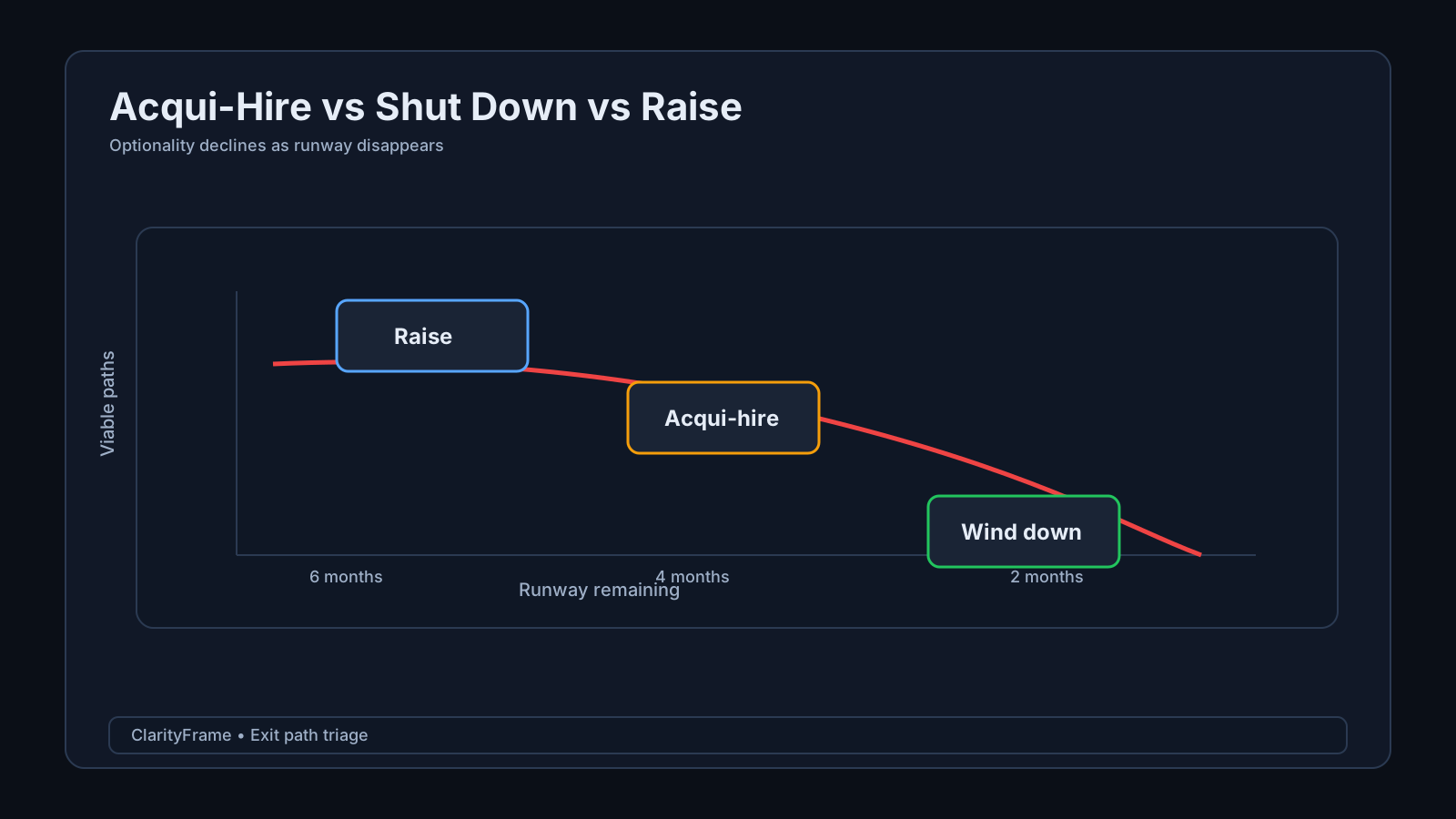
Exit decisions improve when founders separate team value, asset value, and raise feasibility before runway pressure removes optionality. The goal is to preserve the best executable path, not to defend a narrative.
Summary framework
- Define the decision as an optionality problem.
- Separate team, product, and customer value.
- Map acqui-hire interest before urgency peaks.
- Stress-test the raise path against current reality.
- Set a decision deadline before execution collapses.
When a company is approaching an existential decision, the biggest mistake is not choosing the wrong path. It is waiting until runway removes the ability to choose any path well.
This is the same optionality problem underneath When to Kill a Project or Pivot and When to Raise Funding: A Founder Decision Framework, just with far less time and much more consequence.
Definitions
- Acqui-hire: An acquisition primarily for team value rather than product value.
- Asset sale: Sale of product, IP, contracts, or other assets without a full company acquisition.
- Wind-down: A structured company closure that manages obligations and preserves reputation.
- Extension raise: Capital raised mainly to buy time to reach a cleaner financing event.
What causes founders to delay exit decisions too long?
Three patterns show up repeatedly:
- Optimism stretches runway assumptions beyond reality.
- The preferred path changes every week, so no path advances.
- Social pressure to keep trying replaces structural analysis.
A 4-step exit decision framework
1) Separate team value from company value
The team may be valuable even if the standalone company is not. Product assets may be valuable even if team retention is weak. Treat those as separate paths.
2) Stress-test the raise path against the market you actually face
If the raise path depends on traction you cannot reach within current runway, it is not a real plan.
3) Map acqui-hire interest early
These conversations take time. If you wait until runway is nearly gone, the path closes fast.
4) Set a decision deadline
Choose the runway point at which one path becomes mandatory. Do not wait until you hit it.
The quality of this decision usually drops fast once team retention risk becomes visible internally.
Example scenario
A founder has 5 months of runway, weak financing prospects, and two early acqui-hire signals.
- Decision statement: Pursue raise, acqui-hire, or structured wind-down?
- Criteria: Time to close, probability of success, team retention, cap table constraints.
- Outcome: Parallel acqui-hire conversations begin while the raise path gets 60 more days.
- Execution: Clear owner, timeline, and review trigger.
FAQ
How do founders decide between raising more money and shutting down?
Compare the time and probability of each path against remaining runway. If a raise is not executable within current reality, it cannot be the only plan.
What is an acqui-hire and when should a founder consider it?
It is a transaction centered on team value. It becomes relevant when the team is strong but product or market traction is not enough to support continuation.
When is it time to shut down a startup?
When no path to value creation can be executed within remaining runway and continued operation only destroys the remaining optionality.
How do founders protect their team during a wind-down?
Communicate early, preserve transition time, and manage references and introductions with discipline.
Bottom line
Exit decisions are resource allocation decisions under severe constraint. The earlier the analysis starts, the cleaner every remaining option becomes.
If this is already a live board-level issue, do not leave it in passive evaluation. This is a direct Clarity Sprint case.
Substack
Get The Briefs By Email
Operator notes and decision frameworks sent through Substack.
Related Briefs
-
When to Raise Funding: A Founder Decision FrameworkDecide whether to raise now by testing runway, dilution, timing, and the no-raise path before entering a live process.
-
When to Kill a Project or Pivot: A Founder FrameworkA practical framework for founders to decide whether to kill, pivot, or continue an initiative without losing another quarter.
-
Go-to-Market Model Decision Framework: PLG vs Sales-Led vs ChannelChoose the right go-to-market model by matching buyer behavior, activation readiness, and deal economics before layering motions.
-
Budget Allocation Tradeoff Framework for Growth and Runway DecisionsAllocate budget with a framework balancing return confidence, downside risk, and runway protection.
-
How to Choose a Target Customer Segment: A Revenue-First FrameworkSelect one target segment using pain urgency, access friction, and unit economics.