Journal
Board and Investor Alignment Framework: When Stakeholders Disagree
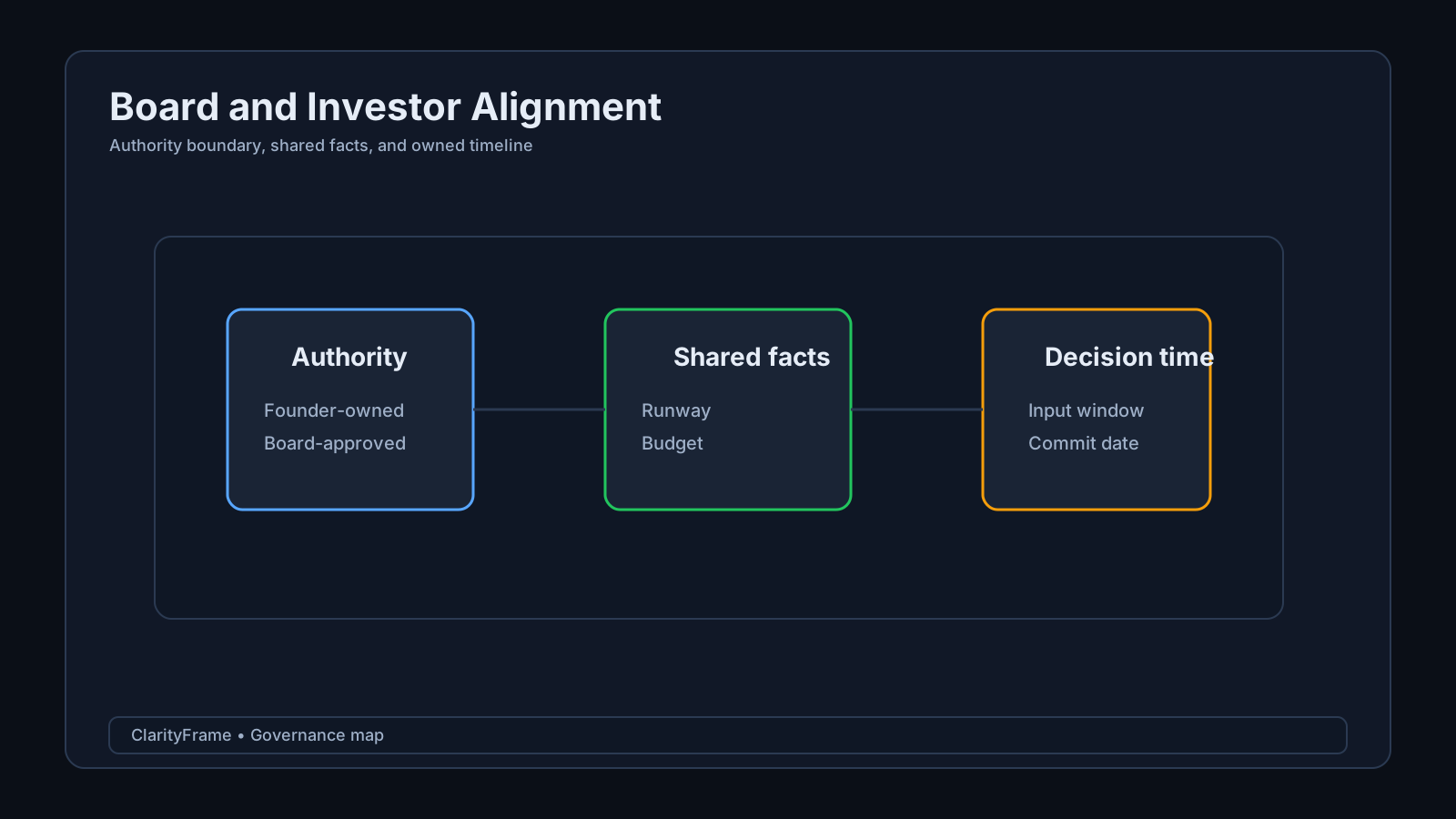
Executive answer
Most founder-investor disagreement is not a relationship problem. It is a decision architecture problem involving unclear authority, different fact bases, and unowned timing.
Summary framework
- Separate governance from operations.
- Define which calls require board alignment.
- Use one shared fact base.
- Identify the real concern behind each investor position.
- Set a decision timeline and own it.
Investor disagreement usually escalates when authority boundaries are vague and each side is arguing from different assumptions.
If the disagreement is happening during fundraising or a major timing call, this should be read alongside When to Raise Funding: A Founder Decision Framework and Strategic vs Reversible Decisions: When to Move Fast.
Definitions
- Board governance: The formal structure that determines which decisions require board approval.
- Investor position: An investor’s stated preference, concern, or objection.
- Decision authority map: A clear assignment of founder-owned, board-owned, and advisory decisions.
- Framing conflict: A disagreement caused by different interpretations of the same underlying facts.
What causes board and investor misalignment to escalate?
Three patterns are common:
- Authority boundaries were never explicit.
- Founders answer the surface argument instead of the underlying concern.
- There is no shared fact base.
A 4-step board alignment framework
1) Clarify decision authority before the conversation
Know whether the decision is advisory, informed, or formally board-controlled before you enter the meeting.
2) Identify the underlying concern behind the investor position
An objection to hiring may really be a burn concern. An objection to a pivot may really be a signaling concern.
3) Establish one shared fact base
Agree on the numbers, assumptions, and timeline before trying to resolve the disagreement.
4) Own the timeline
Seeking input does not mean waiting indefinitely for alignment to magically appear.
That is usually where founder authority gets blurred. Advice and approval are not the same thing.
Example scenario
A board member pushes against sales team expansion because of burn. The founder believes expansion is needed to hit revenue targets.
- Decision statement: Expand now, phase expansion, or delay?
- Criteria: Revenue risk, burn impact, runway sensitivity, execution authority.
- Outcome: Founder proposes a phased plan tied to explicit burn triggers.
- Execution: Board gets the revised plan in writing and the timeline is fixed.
FAQ
How do founders handle disagreements with investors?
Clarify authority, align on facts, and address the real concern instead of the surface argument.
Which decisions require board approval for a founder?
That depends on governing docs, but major financings, M&A, CEO changes, and some equity actions commonly require formal board approval.
How do you maintain founder authority while respecting board governance?
Map decision rights clearly and use board input where it belongs without turning every operating call into a governance event.
What should a founder do when an investor repeatedly blocks decisions?
Check whether the investor actually has blocking authority. If so, address the concern with data. If not, address the structural issue directly.
Bottom line
Board disagreement is often a structural clarity problem more than a persuasion problem.
If the stakes are live and the room is no longer separating governance from execution, use Clarity Sprint rather than trying to negotiate clarity ad hoc.
Substack
Get The Briefs By Email
Operator notes and decision frameworks sent through Substack.
Related Briefs
-
When DIY Frameworks Fail: How to Know You Need a Thinking PartnerRecognize when the problem is framing, not information, and when a structured outside session will close the decision faster.
-
When to Replace a Leader: A Decision Framework for FoundersDecide replacement timing using performance trajectory, risk, and transition readiness criteria.
-
Founder Decision Framework: Why Clarity Matters Even With Strong AdvisorsAdvisors expand optionality. This founder decision framework helps compress options into clear final decisions and execution ownership.
-
When Founders Disagree: A Resolution Framework That Protects the CompanyHow co-founders can resolve high-stakes disagreements quickly without damaging trust, velocity, or strategic coherence.
-
Crisis Decision Framework: How to Triage Company-Threatening EventsHandle company-threatening events by stabilizing first, assigning single owners, and sequencing decisions by urgency.