Journal
Equity vs Salary: Compensation Decision Framework for Early Hires
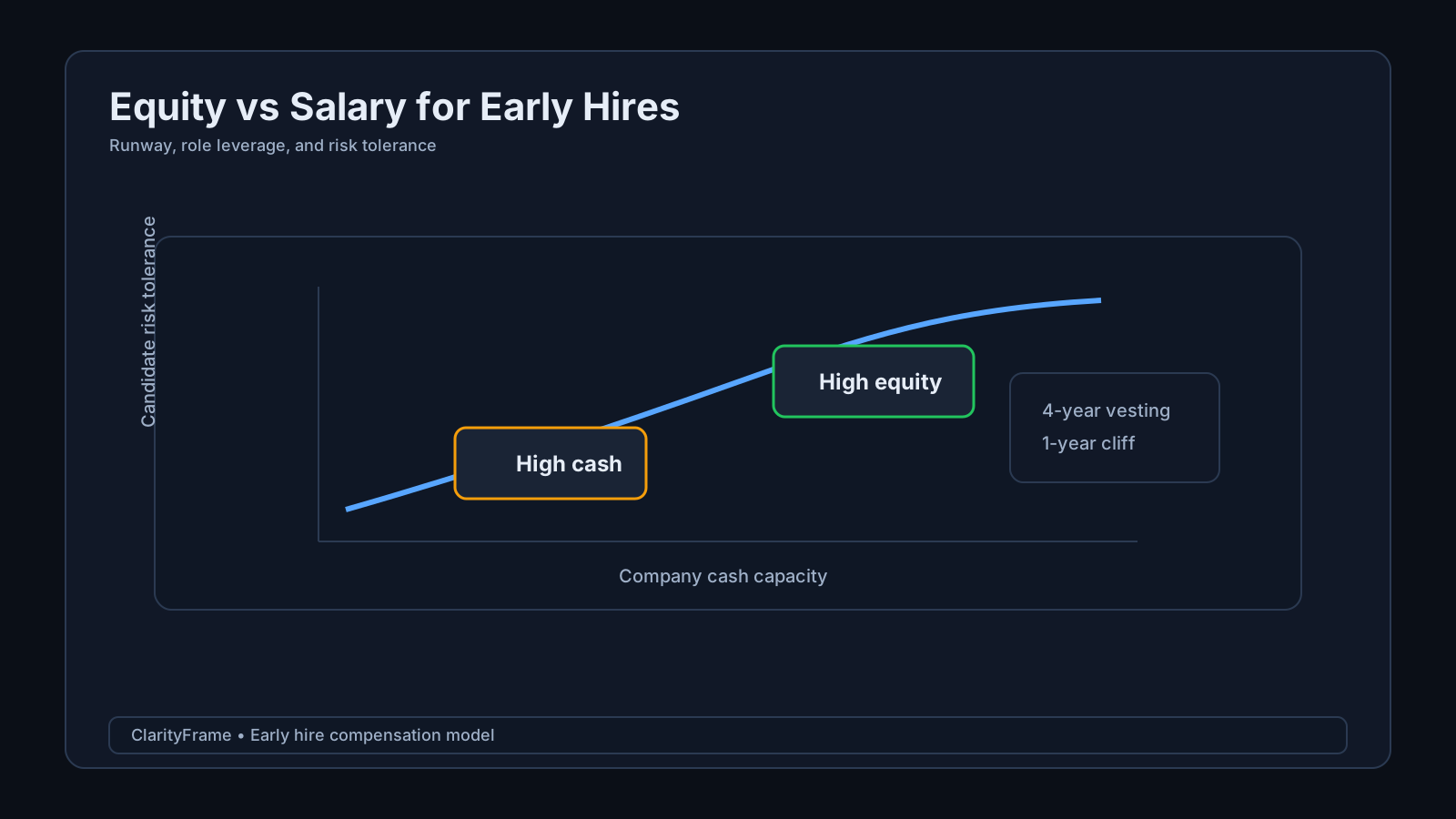
Executive answer
Early compensation decisions should start with runway and role criticality, then translate into consistent equity and cash bands. Improvised offers become cap table problems later.
Summary framework
- Anchor compensation on runway, not competitors.
- Separate salary from equity.
- Define candidate risk tolerance first.
- Use one model across early hires.
- Protect the company with clear vesting structure.
Early compensation decisions are cap table decisions. A misaligned grant can outlast the employee relationship by years.
This pairs closely with Hire vs Contractor vs Agency Decision Model and When to Replace a Leader: A Decision Framework for Founders. Bad hiring economics and bad hiring decisions tend to travel together.
Definitions
- Equity compensation: Ownership granted in exchange for taking startup risk, usually with vesting.
- Vesting cliff: The minimum tenure before any equity vests.
- Cliff risk: The risk created by departure timing around the cliff window.
- Compensation leverage: Using equity to stretch cash while staying competitive enough to close the right hire.
What causes early compensation decisions to go wrong?
Three failure modes recur:
- Equity is improvised candidate by candidate.
- Cash gets overextended for low-risk-tolerance hires.
- Vesting structure is not built to protect the company.
A 4-step early hire compensation framework
1) Establish a model before the first senior hire
Set equity bands by role and stage, and cash bands by runway position.
2) Assess candidate risk tolerance first
How a candidate reacts to equity-heavy offers is itself a fit signal in early-stage roles.
3) Separate the equity and salary conversations
Equity is ownership in the upside. Salary is compensation for time. Treating them as one vague trade usually muddies both.
4) Structure vesting around realistic departure risk
Standard vesting with a one-year cliff protects the company through the most common early departure window.
The point is consistency. Once compensation becomes ad hoc, future fundraising and board conversations get messier than they need to be.
Example scenario
A founder is building an offer for the first sales hire, and the candidate is uneasy about below-market cash.
- Decision statement: Can the offer close the candidate without damaging runway or cap table integrity?
- Criteria: Risk tolerance, cash affordability, equity band, runway impact.
- Outcome: Offer uses below-market cash with above-band equity and clear vesting logic.
- Execution: Model is documented before the offer goes out.
FAQ
How much equity should early employees get?
It varies by role, stage, and leverage, but the important discipline is using consistent bands rather than improvising.
How do you balance salary and equity for early hires?
Start with what the business can sustain in cash, then use equity to bridge the gap proportionally to role importance and candidate risk tolerance.
What is a vesting cliff and why does it matter?
A cliff prevents equity from vesting before a minimum contribution period, usually one year.
Should you use the same equity model for all early hires?
Use the same framework with role-based bands. Ad hoc grants create fairness and governance problems later.
Bottom line
Compensation decisions are usually framed like hiring negotiations. They should be framed like capital allocation.
If you are balancing cap table fairness, runway pressure, and candidate risk tolerance in real time, start with Decide Now or close it in Clarity Sprint.
Substack
Get The Briefs By Email
Operator notes and decision frameworks sent through Substack.
Related Briefs
-
How to Decide When to Fire an UnderperformerMake cleaner termination decisions by separating fit from performance, setting thresholds, and costing the delay.
-
When to Replace a Leader: A Decision Framework for FoundersDecide replacement timing using performance trajectory, risk, and transition readiness criteria.
-
Hire vs Contractor vs Agency Decision Model for Revenue-Critical WorkChoose the right staffing model using timeline, control, and execution risk criteria.
-
Founder Decision Fatigue Framework: Protect Judgment Under LoadA practical framework for reducing founder decision fatigue by redesigning ownership, delegation, and strategic decision flow.
-
Founder Decision Framework: Why Clarity Matters Even With Strong AdvisorsAdvisors expand optionality. This founder decision framework helps compress options into clear final decisions and execution ownership.