Journal
High-Stakes Decision-Making Framework for Founders
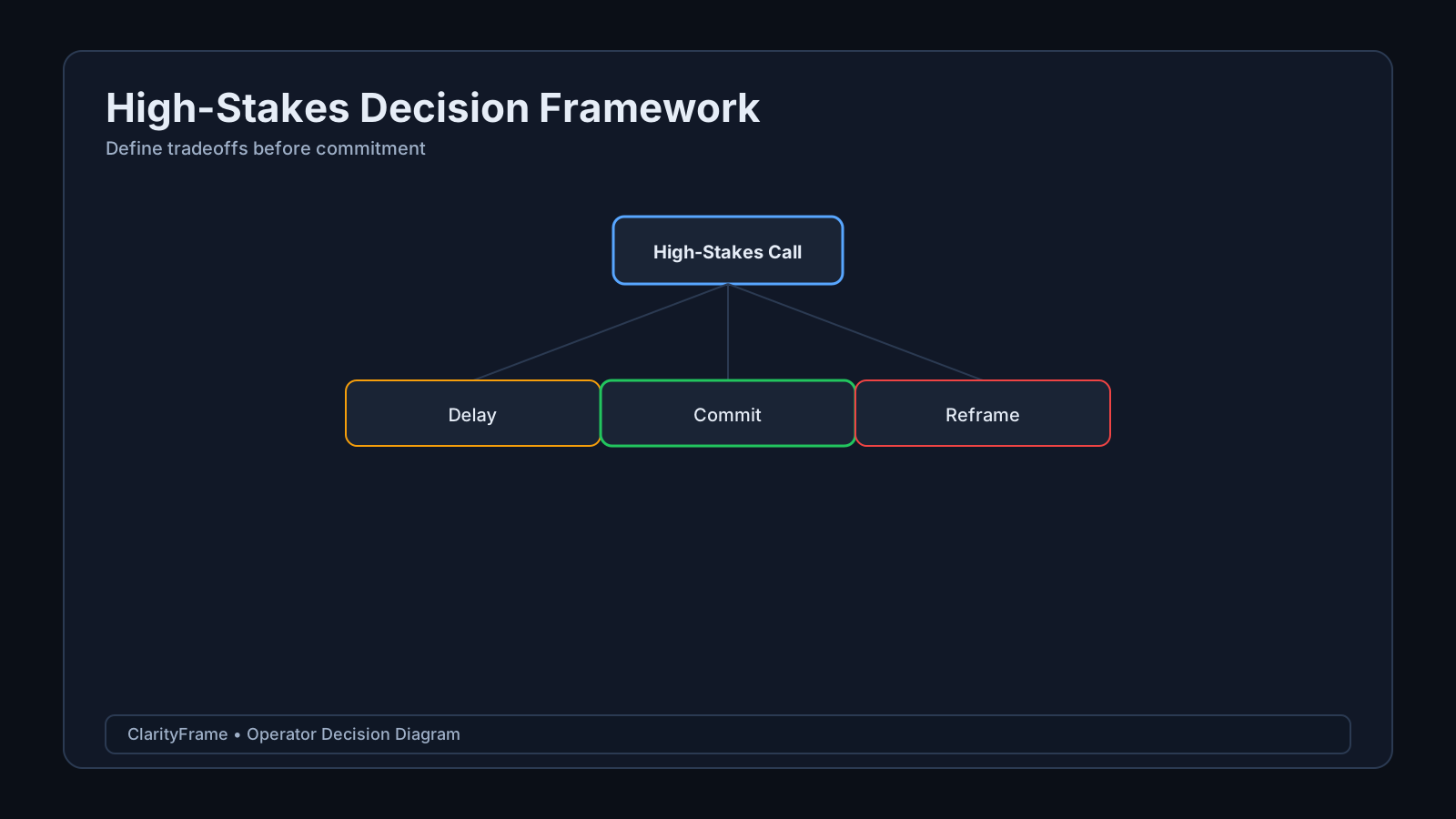
Summary framework
- Define the decision in one sentence before discussing options.
- Lock 3 to 5 criteria so tradeoffs are explicit.
- Score all options on one shared scoreboard.
- Commit with owner, timeline, and first 72-hour action.
- Track one success signal and one correction trigger.
When downside is real, teams often choose analysis over commitment. It feels responsible, but usually delays execution without improving decision quality.
In most cases, the blocker is not missing data. The blocker is missing decision clarity.
Definitions
- High-stakes decision: A decision with meaningful downside, limited reversibility, or major impact on execution.
- Decision clarity: Shared understanding of what is being decided, by which criteria, and why one option wins.
- Decision drag: Repeated analysis without commitment, causing slower execution and weaker ownership.
- Reversible decision: A decision you can correct quickly with manageable cost.
- Irreversible decision: A decision with high switching cost, strategic lock-in, or reputational impact.
What causes decision paralysis in high-stakes moments?
Teams stall when three things are unclear:
- What exact decision are we making right now?
- What criteria determine a good decision?
- What tradeoff are we willing to own?
Without those answers, analysis becomes delay.
A 4-step high-stakes decision framework
1) Name the decision in one sentence
If this sentence is fuzzy, the team is solving different problems in parallel.
2) Lock the decision criteria
Choose 3 to 5 criteria maximum. Typical examples:
- speed to value
- downside risk
- strategic fit
- reversibility
3) Compare options against the same criteria
Use one shared scoreboard. Do not let each option define its own success logic.
4) Commit to one next move
A decision is incomplete until owner, timeline, and first action are explicit.
Example scenario
A founder is choosing between a pricing increase and a packaging overhaul.
- Decision statement: Choose one pricing move to improve margin this quarter.
- Criteria: Revenue impact, implementation speed, customer risk, reversibility.
- Outcome: Simple pricing increase wins due to speed and reversibility.
- Execution: Owner assigned, rollout date set, churn threshold defined as correction trigger.
Diagnostic questions before you close
Use this checklist:
- Are we solving one decision or multiple?
- Did criteria stay fixed from start to finish?
- Is first-owner accountability explicit?
- Do we know the signal that confirms success?
- Do we know the trigger that forces a correction?
If any answer is unclear, the decision is not ready to close.
FAQ
What is the best framework for high-stakes decision making?
Use a 4-step model: define the decision, lock criteria, compare options on one scoreboard, then commit with owner and timeline.
How many criteria should a founder use?
Use 3 to 5 criteria. More than that usually adds noise and slows commitment.
How do I tell if a decision is high-stakes or reversible?
If switching cost, downside risk, or long-term impact is high, treat it as high-stakes. If it can be corrected quickly and cheaply, it is reversible.
Why do teams revisit the same decision repeatedly?
Because criteria were unclear, ownership was vague, or no execution signal was defined.
What should happen in the first 72 hours after a major decision?
Assign ownership, execute one concrete action, and track one leading signal plus one correction trigger.
Bottom line
High-performing teams do not avoid hard decisions. They make them earlier with cleaner logic, explicit tradeoffs, and fast execution ownership.
If a decision keeps resurfacing, the fix is usually not more analysis. The fix is better framing, tighter criteria, and immediate commitment.
Substack
Get The Briefs By Email
Operator notes and decision frameworks sent through Substack.
Related Briefs
-
How to Choose Between Two Good Options: A Founder Tie-Breaker ModelA practical model for founders to break deadlocks between two strong options without over-deliberating or losing momentum.
-
When DIY Frameworks Fail: How to Know You Need a Thinking PartnerRecognize when the problem is framing, not information, and when a structured outside session will close the decision faster.
-
Crisis Decision Framework: How to Triage Company-Threatening EventsHandle company-threatening events by stabilizing first, assigning single owners, and sequencing decisions by urgency.
-
Founder Decision Fatigue Framework: Protect Judgment Under LoadA practical framework for reducing founder decision fatigue by redesigning ownership, delegation, and strategic decision flow.
-
Clarity Sprint vs Ignite Framework: How to Choose the Right SessionUse a 4-step framework to choose between Clarity Sprint and Clarity Ignite based on complexity, downside, and reversibility.