Journal
How to Choose Between Two Good Options: A Founder Tie-Breaker Model
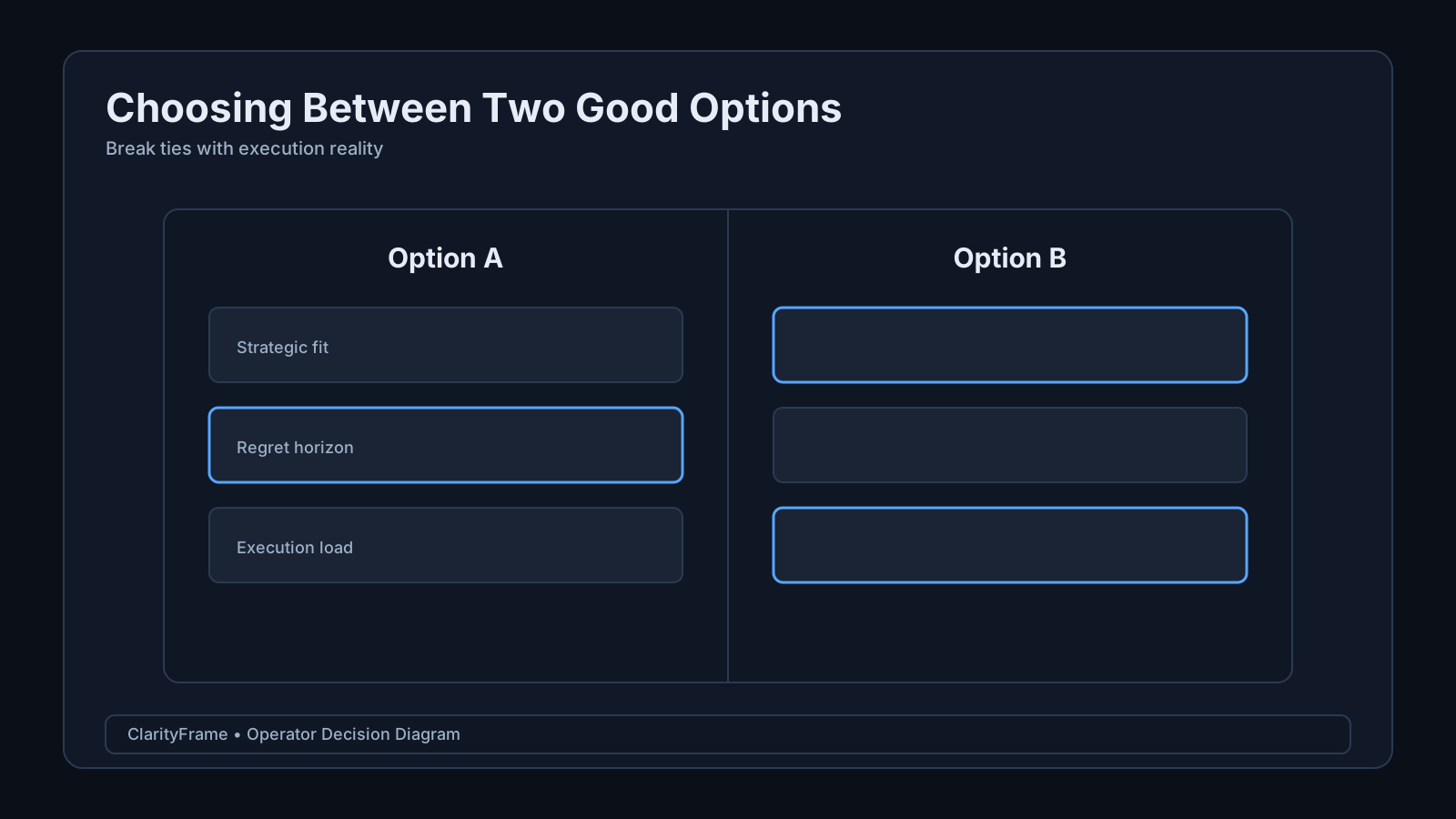
When two options are both strong, most teams waste time trying to find a mathematically perfect winner.
That usually fails. In close calls, the right question is not “Which option is universally better?” It is “Which option is better for this strategy, this team, and this timing window?”
Executive Answer
When founders face two good options, use weighted fit, regret horizon, and execution load to break the tie. Pick the option with better strategic fit and cleaner execution under current constraints, then define an early review trigger. The goal is not certainty. The goal is a committed path with controlled downside.
Summary Framework
- Define what winning must look like in this quarter.
- Score both options against current strategic constraints.
- Compare 12-month regret, not meeting-room preference.
- Choose the path your team can execute cleanly now.
- Set one review trigger to revisit only if signal changes.
Definitions
Two-good-options decision: A choice where both paths are viable and expected outcomes are close.
Regret horizon: The future time frame used to assess which decision is more likely to be regretted.
Execution load: The real operational burden a decision adds across people, systems, and coordination.
Problem Scenario
A founder must choose between:
- expanding the enterprise sales motion now, or
- launching a self-serve growth experiment.
Both are plausible. Both have upside. The team is split 50/50.
Weeks pass. Meetings continue. No one is wrong, but no one is committing.
The Tie-Breaker Triangle
1) Strategic fit score
Score each option from 1-5 on:
- relevance to current company priority
- alignment with near-term revenue targets
- support for positioning you want long term
2) Regret horizon test
Ask: “In 12 months, which missed option would hurt more?”
This often clarifies the real strategic cost of delay.
3) Execution load reality check
Estimate the first 60 days of execution burden:
- number of teams involved
- dependencies required
- leadership attention needed
If one option has materially lower execution drag with similar upside, that is usually the better call.
Before vs After
Before
Team debates upside narratives and seeks consensus language.
Result: no commitment, delayed execution, and shallow progress on both options.
After
Founder applies Tie-Breaker Triangle and commits to one path with a 45-day review trigger.
Result: immediate focus, faster learning, and clearer accountability.
Diagnostic Checklist
- What must be true for this quarter to count as a win?
- Which option has higher strategic fit right now?
- Which missed option creates bigger 12-month regret?
- Which option has lower 60-day execution load?
- What signal would justify reopening this decision?
- Who owns execution for the chosen path?
Common Mistakes
- Treating close options as a reason to delay commitment.
- Confusing persuasive debate with stronger fit.
- Ignoring execution load when comparing opportunities.
- Reopening the decision without a defined trigger.
When to Seek External Decision Help
If leadership is deadlocked between two plausible paths and delay is compounding cost, an external session can force tradeoff clarity and close the call quickly.
FAQ
What if both options score similarly?
Use regret horizon and execution load as tie-breakers. They usually reveal the better decision for current conditions.
Should we split resources across both options?
Only if resources are truly independent. Most teams dilute impact when they hedge.
How long should we wait before reviewing?
Set a trigger-based review window, often 30-60 days, depending on feedback speed.
Is this just a weighted decision matrix?
No. It adds regret horizon and execution load, which are often missing and decisive.
What if stakeholders disagree after commitment?
Document rationale and trigger conditions. Revisit only when trigger criteria are met.
Can this work in early-stage companies?
Yes. It is especially useful where resource constraints make hedging expensive.
Bottom Line
Between two good options, speed with structure beats prolonged debate.
Make the call that fits strategy now, execute it fully, and revisit only on signal.
Substack
Get The Briefs By Email
Operator notes and decision frameworks sent through Substack.
Related Briefs
-
High-Stakes Decision-Making Framework for FoundersA practical framework to define the decision, set criteria, compare options, and commit to execution with clarity.
-
When DIY Frameworks Fail: How to Know You Need a Thinking PartnerRecognize when the problem is framing, not information, and when a structured outside session will close the decision faster.
-
Crisis Decision Framework: How to Triage Company-Threatening EventsHandle company-threatening events by stabilizing first, assigning single owners, and sequencing decisions by urgency.
-
Founder Decision Fatigue Framework: Protect Judgment Under LoadA practical framework for reducing founder decision fatigue by redesigning ownership, delegation, and strategic decision flow.
-
Clarity Sprint vs Ignite Framework: How to Choose the Right SessionUse a 4-step framework to choose between Clarity Sprint and Clarity Ignite based on complexity, downside, and reversibility.