Journal
Product Roadmap Prioritization Framework: Feature vs Platform Decisions
Executive answer
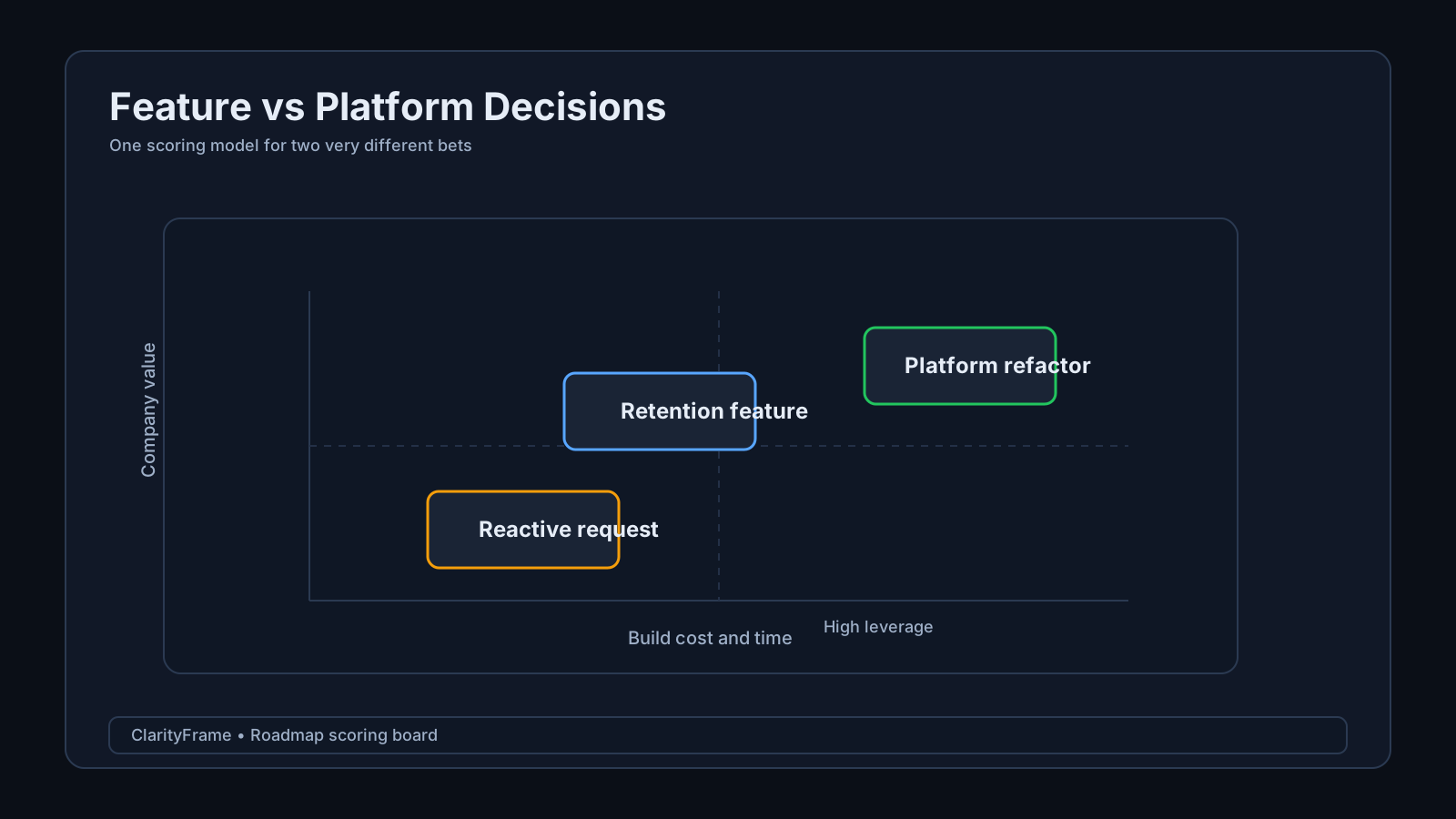
Roadmaps get cleaner when feature requests and platform bets stop competing inside the same vague debate. Separate them first, then score them on one shared model.
Summary framework
- Separate feature requests from platform bets.
- Anchor prioritization on retention impact.
- Cost platform deferral explicitly.
- Use one visible scoring model.
- Review often enough to prevent drift.
Roadmap debates are rarely about the wrong items. They are usually about the absence of shared prioritization logic.
That same failure mode shows up in How to Prioritize Competing Initiatives and Resource Allocation Under Constraint Framework. Product teams just feel it faster because every stakeholder thinks their request is urgent.
Definitions
- Feature decision: A scoped capability added inside the current architecture.
- Platform decision: A foundational investment that changes what the product can support.
- Retention anchor: A capability whose absence causes real churn risk.
- Roadmap drift: The slow accumulation of reactive work that weakens product direction.
What causes roadmap prioritization to break down?
Three failure modes are common:
- Sales drives roadmap through escalation.
- Platform work gets deferred because its payoff is less visible in the quarter.
- No shared scoring model exists, so meetings turn political.
A 4-step product prioritization framework
1) Classify each item as feature or platform
These items have different time horizons and different success metrics. They should not compete without that distinction.
2) Score features on retention impact first
The feature that prevents churn often compounds more than the feature that closes one excited prospect.
3) Cost platform deferrals explicitly
Make the engineering workarounds, customer friction, and future refactor cost visible.
4) Lock one shared scoring rubric
Use one model across product, engineering, sales, and leadership so reprioritization stays documented and comparable.
Without that, roadmap debate is usually just political escalation dressed up as customer empathy.
Example scenario
A team is debating a customer-requested bulk export feature versus a data-model refactor needed for enterprise contracts.
- Decision statement: Which investment creates more value in the next two quarters?
- Criteria: Retention impact, revenue unlock, deferral cost, resource load.
- Outcome: Refactor wins because further delay blocks enterprise revenue.
- Execution: Refactor gets Q2 capacity and feature is scoped for Q3.
FAQ
How do you prioritize a product roadmap effectively?
Use a shared scoring model that distinguishes feature work from platform work and makes deferral cost explicit.
What is the difference between feature prioritization and platform prioritization?
Features create user-facing value within the current system. Platform work changes what the system can support.
How do you handle roadmap requests from sales?
Route them through the same scoring model as everything else rather than treating escalation as priority.
When should you invest in platform work over new features?
When the cost of deferral exceeds the near-term value of the feature work competing with it.
Bottom line
Roadmap prioritization is a resource allocation problem. It needs a model, not a louder meeting.
If the roadmap is really a proxy fight between revenue pressure and platform debt, close it through Decide Now or Clarity Sprint.
Substack
Get The Briefs By Email
Operator notes and decision frameworks sent through Substack.
Related Briefs
-
Resource Allocation Under Constraint: A Framework for Executive TradeoffsAllocate scarce capacity with a framework that protects high-impact execution.
-
How to Prioritize Competing Initiatives Without Political DriftA founder model for prioritizing competing initiatives by strategic value, capacity, and time sensitivity.
-
AI Adoption Framework: Why AI Exposes Workflow ProblemsA practical AI adoption framework for redesigning broken workflows before automating them with tools, copilots, and platforms.
-
Crisis Decision Framework: How to Triage Company-Threatening EventsHandle company-threatening events by stabilizing first, assigning single owners, and sequencing decisions by urgency.
-
High-Stakes Decision-Making Framework for FoundersA practical framework to define the decision, set criteria, compare options, and commit to execution with clarity.