Journal
When DIY Frameworks Fail: How to Know You Need a Thinking Partner
Executive answer
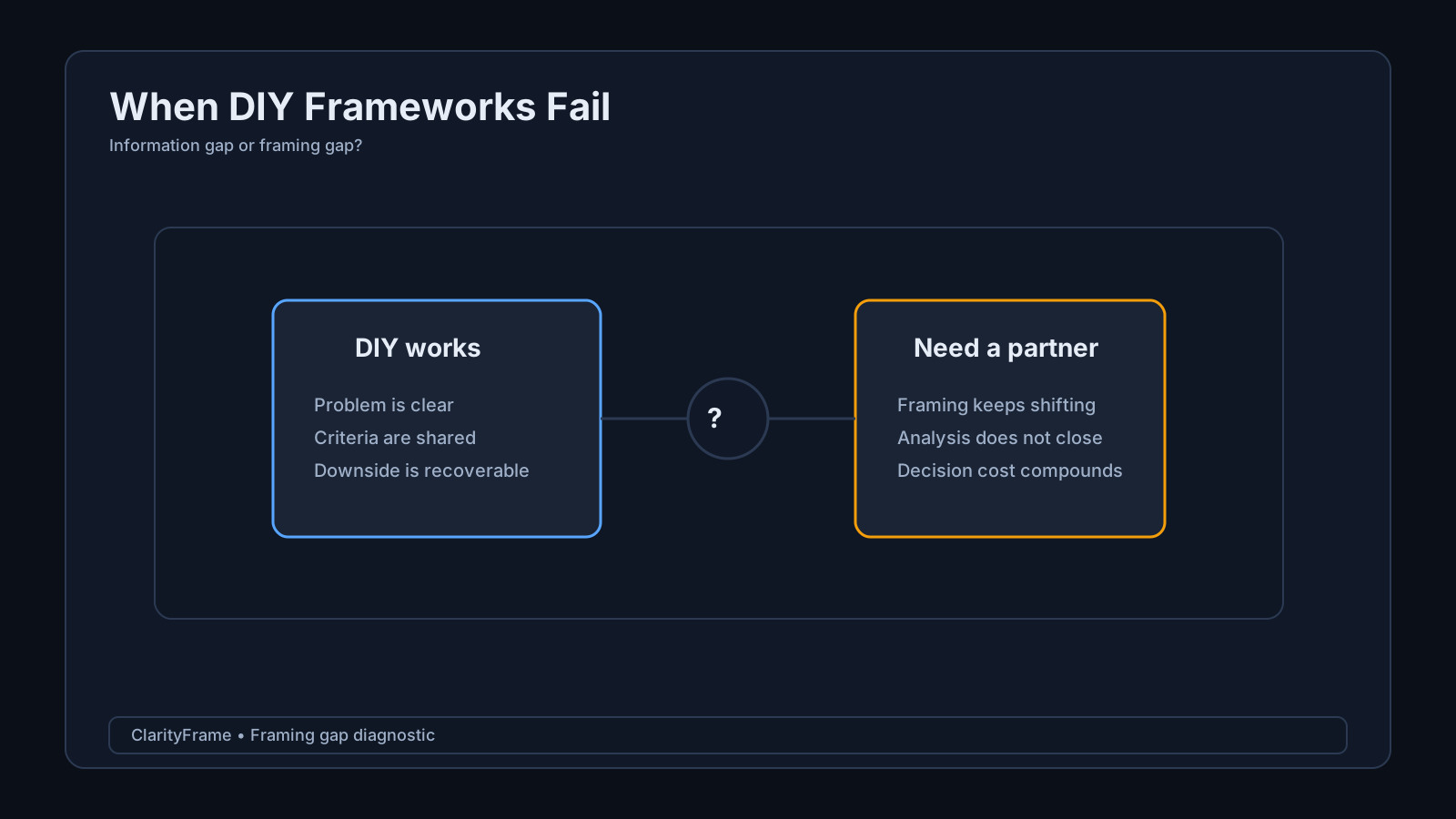
Frameworks fail when the decision keeps moving, the team keeps reanalyzing, and the real bottleneck is framing rather than information. That is when outside clarity creates speed.
Summary framework
- Recognize when a framework will not close the decision.
- Separate information gaps from framing gaps.
- Assess whether proximity is distorting analysis.
- Cost delay before judging outside support.
- Match the decision to the right session format.
Frameworks help. They reduce noise and create shared vocabulary. But some decisions stay stuck because the team is asking the wrong question with better structure each week.
If that sounds familiar, start with the baseline in High-Stakes Decision-Making Framework for Founders and compare it with Making Decisions With Incomplete Data. When both are technically useful but the team still cannot commit, the bottleneck is usually framing.
Definitions
- Framing gap: The core question is undefined or misidentified, so analysis targets the wrong problem.
- Proximity distortion: The team is too close to the issue to see its assumptions clearly.
- Decision fatigue accumulation: Multiple unresolved decisions degrading judgment quality over time.
- External clarity: A structured outside perspective that pressure-tests framing without political baggage.
What signals that a framework is not enough?
Five patterns usually indicate the need for a thinking partner:
- The team has analyzed the decision multiple times and keeps changing conclusions.
- New data keeps getting requested without changing direction.
- Strong opinions exist, but no one can define the winning criteria clearly.
- The downside of a wrong call is too large to keep circling.
- The team has already written the brief and still would not commit tomorrow.
When frameworks are sufficient
A framework alone usually works when:
- The decision type is familiar.
- Criteria are already clear and shared.
- The downside is recoverable.
- The team agrees on the problem even if the preferred option differs.
When external clarity changes the outcome
A structured outside session helps when:
- The framing itself needs pressure-testing.
- Team proximity has embedded bad assumptions.
- Multiple unresolved calls are compounding fatigue.
- The decision has significant downside and limited reversibility.
What Clarity Frame sessions do
Sprint and Ignite do not replace management. They structure the decision, surface assumptions, apply the right criteria, and close on one direction with explicit next actions.
Use Clarity Sprint when the decision needs a full close with execution ownership. Use Clarity Ignite when the first need is diagnosis and framing. If the right path is still unclear, Decide Now is the lowest-friction screen.
FAQ
How do I know if I need a decision consultant?
If the team keeps circling the same decision despite repeated analysis, the problem is often framing rather than effort.
What is the difference between a coach, advisor, and thinking partner?
A coach works on the person. An advisor gives domain guidance. A thinking partner works on the decision itself.
Can a 60-minute session actually close a high-stakes decision?
Often yes, because the bottleneck is usually framing, not missing information.
What types of decisions fit a Clarity Sprint?
Pricing, hiring, market entry, pivot calls, and other decisions where the data exists but commitment does not.
Is this only for founders?
No. It works for founders, operators, and executives carrying real decision pressure.
Bottom line
Frameworks are tools. When the problem is the framing, more structure alone just produces better-organized confusion.
If the team is still looping after reading Why Smart Teams Stall on Big Decisions and How to Stop Decision Loops in Leadership Teams, the next move is probably not another template.
Substack
Get The Briefs By Email
Operator notes and decision frameworks sent through Substack.
Related Briefs
-
Crisis Decision Framework: How to Triage Company-Threatening EventsHandle company-threatening events by stabilizing first, assigning single owners, and sequencing decisions by urgency.
-
High-Stakes Decision-Making Framework for FoundersA practical framework to define the decision, set criteria, compare options, and commit to execution with clarity.
-
Partnership Decision Framework: When to Co-Sell, Integrate, or Stay SoloEvaluate partnerships by objective, incentive alignment, activation thresholds, and exit criteria before signing anything.
-
Board and Investor Alignment Framework: When Stakeholders DisagreeHandle board and investor disagreement with cleaner authority maps, shared facts, and explicit decision timelines.
-
Founder Decision Fatigue Framework: Protect Judgment Under LoadA practical framework for reducing founder decision fatigue by redesigning ownership, delegation, and strategic decision flow.