Journal
When to Kill a Project or Pivot: A Founder Framework
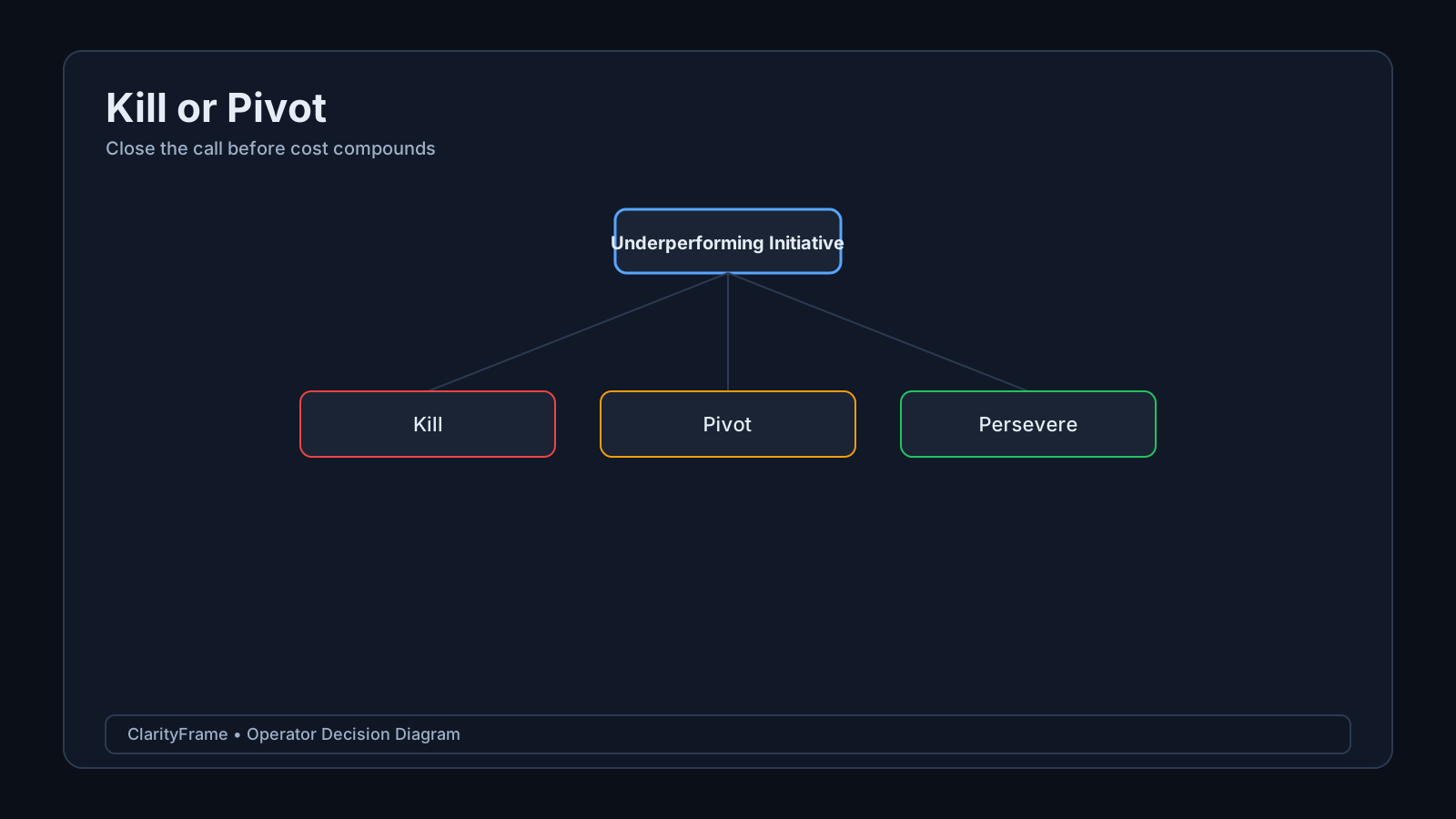
Most projects do not die from one bad decision. They drain value through delayed decisions.
When a team keeps an underperforming initiative alive “for one more cycle,” the real cost is not just budget. It is lost focus, delayed roadmap work, and weaker execution on higher-leverage priorities.
Executive Answer
Kill a project or pivot when forward evidence no longer supports the original thesis, opportunity cost is rising, and no credible recovery path exists inside a defined window. The goal is not emotional conviction or panic. It is a clear call that protects capital, team focus, and strategic momentum.
Summary Framework
- Define the original thesis in one sentence.
- Review trend, not isolated wins.
- Quantify opportunity cost versus next-best use of resources.
- Test whether a pivot path is credible and fast to validate.
- Set a hard decision date and commit to action.
Definitions
Project kill: Ending an initiative and reallocating resources because expected future return is lower than alternatives.
Pivot: Keeping the strategic objective while changing approach, audience, channel, or offer to restore viability.
Persevere: Continuing the current plan because evidence trend still supports the original thesis.
Opportunity cost: The value lost by not deploying team time and budget to a stronger option.
What Does This Look Like in Real Founder Work?
A founder is six months into a new growth initiative. Activity is high. A few metrics improved. Revenue impact remains weak.
Now planning starts:
- Product wants one more cycle.
- GTM wants repositioning.
- Finance flags burn pressure.
- Core roadmap slips because top operators are tied up.
At this point, indecision becomes a strategy by default.
The KILL-PIVOT Decision Test
1) Thesis integrity
Is the original problem-solution thesis still plausible in current market conditions?
2) Signal trajectory
Are leading indicators improving consistently across multiple review cycles?
3) Opportunity cost
What high-leverage initiative is being delayed by keeping this alive?
4) Recovery credibility
Is there a specific pivot hypothesis that can be tested quickly with bounded downside?
5) Time-to-truth
How fast can you know if recovery is real? If the answer is too slow, delay is expensive.
Before vs After
Before
The project stays alive because effort is high and a few customers are positive.
Result: another quarter passes, burn rises, and no breakout signal appears.
After
The team runs the KILL-PIVOT test and sets a 30-day pivot window with one success threshold.
If threshold misses, the initiative is closed and resources redeployed immediately.
Result: faster strategic clarity and better execution concentration.
Diagnostic Checklist
- Is the original thesis still true?
- Which indicators improved for two consecutive cycles?
- What is the exact monthly cost of continuing?
- What better initiative are we starving?
- Is the pivot plan concrete or vague?
- What threshold triggers kill, pivot, or persevere?
- Who owns the final call, and by what date?
Common Mistakes
- Confusing team effort with market validation.
- Calling it a pivot without changing core assumptions.
- Ignoring opportunity cost because it is less visible.
- Extending timelines without clear stop rules.
- Letting politics override forward evidence.
When External Decision Help Is Useful
External decision support is useful when leadership cannot converge, sunk-cost dynamics are distorting judgment, and decision latency is compounding execution risk.
A focused outside session can compress the call and lock ownership without adding bureaucratic process.
FAQ
How do I know if this is a kill signal, not a temporary dip?
If core assumptions are failing and trend is flat across multiple cycles, it is usually a kill or major pivot signal.
What if metrics are mixed?
Prioritize the few indicators that map directly to value creation. Mixed metrics are normal, but trend quality matters more than isolated wins.
Is killing a project bad for morale?
Not if you explain the rationale clearly and redeploy people quickly to meaningful work.
How long should a pivot test run?
Long enough to produce signal, short enough to protect focus. For most teams, 2-6 weeks is a practical range.
Can we keep it alive with a smaller team?
Only with strict scope, hard thresholds, and a short time window. Otherwise it becomes a slow bleed.
Should investors make this call?
Investors can inform the decision, but internal ownership should remain explicit.
Bottom Line
The biggest risk is not making one imperfect call.
The biggest risk is delaying a necessary call while cost compounds in the background.
If this decision is live right now, Clarity Sprint is designed for exactly this level of consequence.
Substack
Get The Briefs By Email
Operator notes and decision frameworks sent through Substack.
Related Briefs
-
When to Raise Funding: A Founder Decision FrameworkDecide whether to raise now by testing runway, dilution, timing, and the no-raise path before entering a live process.
-
Budget Allocation Tradeoff Framework for Growth and Runway DecisionsAllocate budget with a framework balancing return confidence, downside risk, and runway protection.
-
Acqui-Hire vs Shut Down vs Raise: An Exit Decision Framework for FoundersEvaluate acqui-hire, shutdown, or extension raise paths before runway removes the ability to execute any option cleanly.
-
Go-to-Market Model Decision Framework: PLG vs Sales-Led vs ChannelChoose the right go-to-market model by matching buyer behavior, activation readiness, and deal economics before layering motions.
-
Resource Allocation Under Constraint: A Framework for Executive TradeoffsAllocate scarce capacity with a framework that protects high-impact execution.