Journal
When to Raise Funding: A Founder Decision Framework
Executive answer
Raise when capital clearly buys a defined value inflection, the no-raise path has been stress-tested, and your walk-away terms are set before investor momentum starts dictating the decision.
Summary framework
- Identify the decision being funded, not just the milestone.
- Assess runway, growth rate, and dilution tolerance together.
- Stress-test the no-raise path before committing.
- Define minimum acceptable terms before entering the process.
- Set a clear walk-away threshold before the first investor meeting.
Raising is one of the few founder decisions that becomes harder to reverse as soon as the process starts. Once meetings begin, expectations, time cost, and internal distraction compound quickly.
The real question is rarely whether you can raise. It is whether you should raise now, and on what terms.
This is structurally similar to Market Entry Timing Decision Framework: Launch Now or Wait? and Strategic vs Reversible Decisions: When to Move Fast: timing matters as much as the option itself.
Definitions
- Dilution tolerance: The equity percentage a founder is willing to exchange for capital at the current stage and valuation.
- Raise-readiness: The combination of growth signal, product maturity, and team capacity required to run a fundraise without collapsing execution.
- Funding bridge: Capital raised to extend runway without a full round, usually with weaker negotiating leverage.
- Walk-away threshold: The valuation or term boundary below which accepting capital damages future optionality.
What causes founders to raise at the wrong time?
Three situations drive mistimed raises:
- Runway pressure forces terms instead of the business driving them.
- Inbound investor interest gets mistaken for strategic necessity.
- Board or advisor pressure starts a process the team is not ready to execute.
A 4-step fundraising decision framework
1) Define what the capital is actually buying
Not “18 months of runway.” Name the exact capability, hire plan, market move, or product shift the capital is meant to fund. If you cannot explain that in two sentences, the raise logic is weak.
2) Stress-test the no-raise path
Can the business reach the next meaningful value inflection without outside capital? If yes, raising now may trade equity for optionality you do not need yet.
3) Set minimum acceptable terms before any process
Write the valuation floor, dilution ceiling, board stance, and any governance terms you will not accept. Do this before the first meeting, not after term sheet pressure shows up.
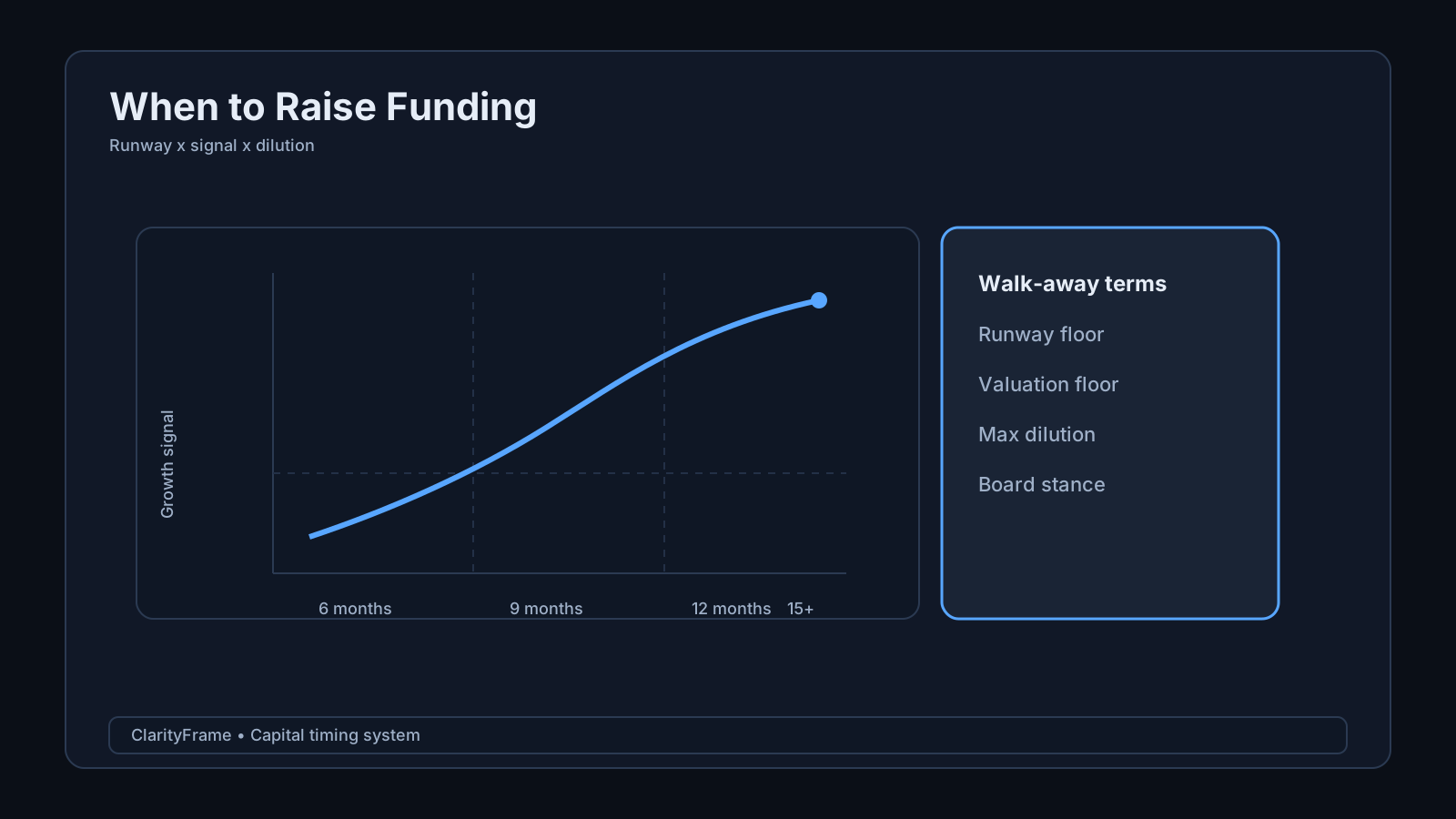
4) Decide timing using runway and growth signal together
Raising with 12 months of runway and visible momentum is a very different process than raising with 6 months and flat metrics. Investors price that difference quickly.
If the board is pushing one path while management wants another, pair this with Board and Investor Alignment Framework: When Stakeholders Disagree.
Example scenario
A founder has 9 months of runway and receives inbound interest from two investors while growth has been flat for two quarters.
- Decision statement: Raise now or extend runway through revenue acceleration?
- Criteria: Dilution cost, growth signal, process distraction, walk-away terms.
- Outcome: Delay the raise by one quarter and push one revenue lever first.
- Execution: One owner, one revenue milestone, one date for re-evaluation.
Diagnostic questions before you decide
- What does this capital specifically buy?
- What happens if you do not raise for another 6 months?
- Have you defined your walk-away terms in writing?
- Can the team run a process without execution collapse?
- What growth signal do investors need to see that you do not have yet?
FAQ
When is the right time for a startup to raise funding?
Raise when you have a clear use of proceeds, a credible growth signal, and enough runway to run a non-distressed process.
How do founders avoid raising at a bad valuation?
Set a valuation floor and dilution ceiling before any investor conversation. Without that, social pressure starts making the decision for you.
Should a founder raise if they have inbound investor interest?
Not automatically. Inbound interest is a signal, not a strategy. Test the no-raise path first.
What is the biggest fundraising mistake founders make?
Raising under runway pressure. Once urgency, rather than business momentum, drives the process, it shows up in the terms.
How long should a fundraise process take?
Most seed and Series A processes take 8 to 16 weeks. Weak preparation usually makes them longer and more expensive.
Bottom line
Raising is a capital allocation decision with permanent equity consequences. Treat it like one.
If you are already in a live process, the terms, timing, and no-raise alternative need to be clear before momentum closes your options.
If the process is already active, route it through Clarity Sprint. If the question is still whether this is a live decision or a monitoring decision, start at Decide Now.
Substack
Get The Briefs By Email
Operator notes and decision frameworks sent through Substack.
Related Briefs
-
Acqui-Hire vs Shut Down vs Raise: An Exit Decision Framework for FoundersEvaluate acqui-hire, shutdown, or extension raise paths before runway removes the ability to execute any option cleanly.
-
When to Kill a Project or Pivot: A Founder FrameworkA practical framework for founders to decide whether to kill, pivot, or continue an initiative without losing another quarter.
-
Go-to-Market Model Decision Framework: PLG vs Sales-Led vs ChannelChoose the right go-to-market model by matching buyer behavior, activation readiness, and deal economics before layering motions.
-
Budget Allocation Tradeoff Framework for Growth and Runway DecisionsAllocate budget with a framework balancing return confidence, downside risk, and runway protection.
-
How to Choose a Target Customer Segment: A Revenue-First FrameworkSelect one target segment using pain urgency, access friction, and unit economics.