Journal
Crisis Decision Framework: How to Triage Company-Threatening Events
Executive answer
Crisis decisions improve when leaders stabilize first, separate downstream issues by urgency, and assign one owner per threat. The failure mode is usually decision collapse, not lack of intelligence.
Summary framework
- Stabilize before you strategize.
- Separate immediate threat from downstream decisions.
- Assign one owner per threat.
- Communicate one version of facts internally.
- Run a 24-hour review cadence until contained.
Crisis decision-making usually breaks because too many people are deciding too many things at once under pressure.
If the team already struggles with clean ownership in normal conditions, review Decision Ownership Framework for Leaders and High-Stakes Decisions Under Time Pressure before the next real crisis forces the lesson.
Definitions
- Crisis: An event threatening revenue continuity, legal standing, team integrity, or trust.
- Stabilization decision: The immediate move that stops loss or buys time.
- Triage: Sequencing crisis-driven decisions by urgency and impact.
- Decision collapse: Breakdown of normal authority under pressure, leading to paralysis or contradiction.
What causes crisis decisions to go wrong?
Four failure modes are common:
- Stabilization and strategy get conflated.
- Too many people try to own the decision.
- Communication is delayed while internal alignment is sought.
- No success signal defines when the acute crisis is over.
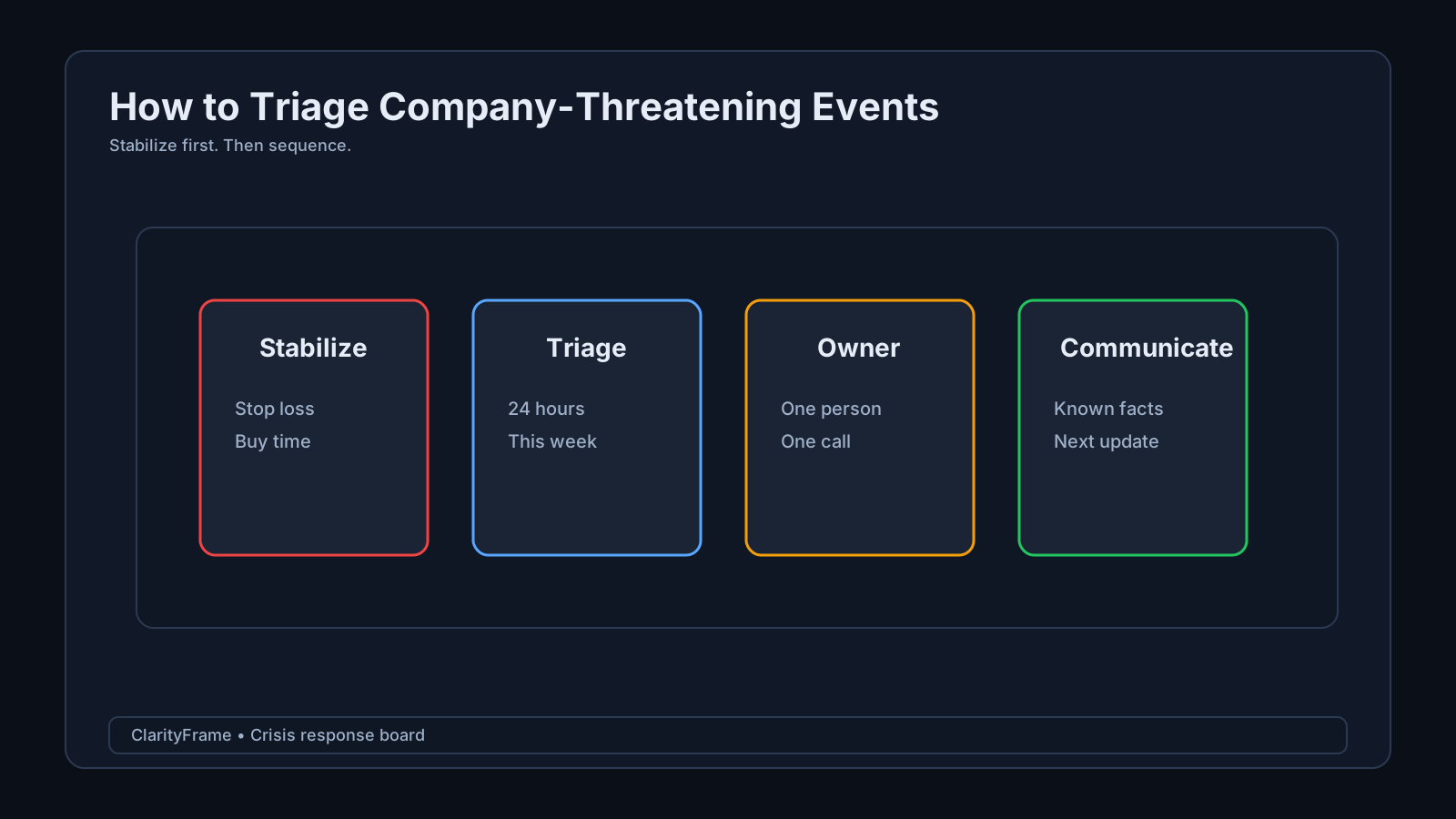
A 4-step crisis triage framework
1) Stabilize first
Stop the bleeding. Pause the product, hold the message, freeze the contract, or make the customer call first.
2) Triage the downstream decisions
Classify them into 24-hour decisions, this-week decisions, and monitor-only items.
3) Assign one owner per decision
Groups can advise. One person still has to own the call.
4) Communicate one version of facts quickly
Tell the team what is known, what is unknown, and when the next update is coming.
Example scenario
A customer representing 30% of ARR announces intent to cancel after a product incident.
- Immediate stabilization: CEO buys a 30-day review window.
- Triage: Incident response now, board update this week, broader churn monitoring ongoing.
- Ownership: CTO owns incident response, CEO owns customer and board communication, VP Sales owns replacement pipeline.
- Communication: Team receives a fact-based update within hours.
The mistake is trying to solve long-term strategy in the same window. That is the same trap outlined in Decision Cadence Beats Decision Drama, just under more pressure.
Diagnostic questions before you act
- What action stops further damage right now?
- Which decisions must be made today versus this week?
- Who owns each decision?
- What do team, board, and customers need to hear next?
- What will count as containment?
FAQ
How do founders make decisions during a company crisis?
Stabilize first, assign one owner per decision, communicate quickly, and sequence the rest by urgency.
What is the biggest mistake leaders make in a business crisis?
Trying to redesign the company in the same meeting where they still have not stopped the immediate damage.
How do you communicate a crisis to your team?
Share what is known, what is unknown, and when the next update will come.
How long should crisis decision cadence last?
Daily until the acute threat is contained, then weekly for downstream work.
Bottom line
Crisis decision quality is mostly determined by ownership and sequencing, not by louder analysis.
If the threat is live and executive judgment is already fragmented, this is usually a Clarity Sprint problem, not a reading problem.
Substack
Get The Briefs By Email
Operator notes and decision frameworks sent through Substack.
Related Briefs
-
High-Stakes Decisions Under Time Pressure: A Founder PlaybookHow founders can make high-stakes decisions quickly under time pressure without defaulting to panic or paralysis.
-
When DIY Frameworks Fail: How to Know You Need a Thinking PartnerRecognize when the problem is framing, not information, and when a structured outside session will close the decision faster.
-
High-Stakes Decision-Making Framework for FoundersA practical framework to define the decision, set criteria, compare options, and commit to execution with clarity.
-
Partnership Decision Framework: When to Co-Sell, Integrate, or Stay SoloEvaluate partnerships by objective, incentive alignment, activation thresholds, and exit criteria before signing anything.
-
Making Decisions With Incomplete Data: A Founder Confidence ModelHow founders can make high-quality strategic decisions when data is incomplete, conflicting, or delayed.