Journal
How to Decide When to Fire an Underperformer
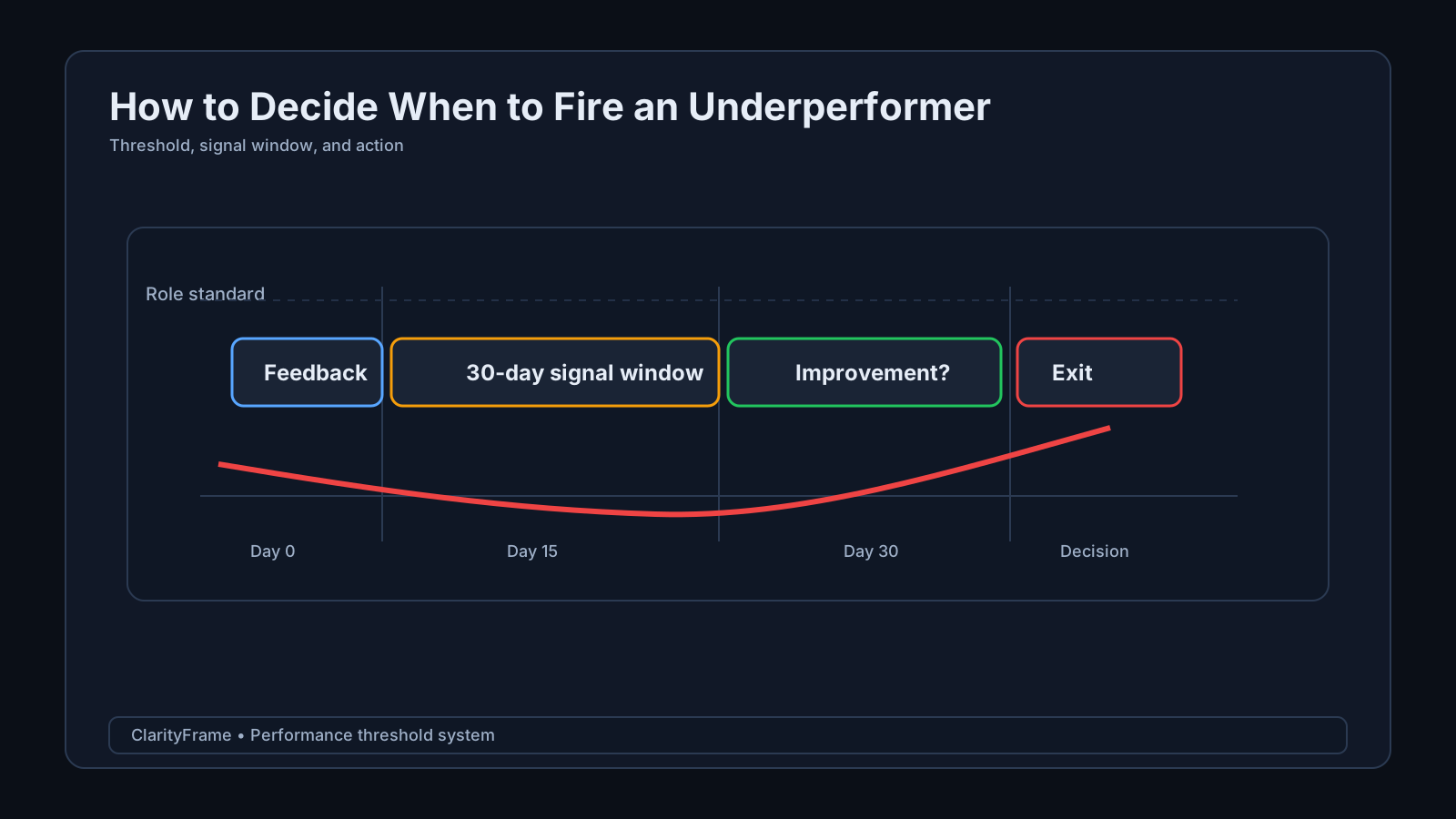
Executive answer
Decide termination by defining the threshold before the conversation, running a real signal window, and costing the drag of delay as seriously as the pain of transition.
Summary framework
- Separate performance from fit before deciding.
- Define the decision threshold before feedback starts.
- Use a 30-day signal window.
- Cost inaction as rigorously as termination.
- Assign execution ownership before the final call.
Founders usually delay firing decisions for the same reasons they delay any hard decision: discomfort, hope, and vague thresholds. The cost of that delay compounds quietly.
This usually sits next to two related failures: weak ownership and repeated reopening. If those patterns sound familiar, see Decision Ownership Framework for Leaders and What to Do When Your Team Won’t Commit.
Definitions
- Performance gap: A documented gap between role expectations and actual output.
- Fit gap: A mismatch between the person and the role, team, or operating style.
- Signal window: A defined period in which improvement must become visible.
- Decision threshold: The condition that clearly triggers the keep-or-exit decision.
What causes founders to delay firing decisions?
Four patterns show up repeatedly:
- The person is well-liked, so social friction overrides accountability.
- The role is hard to backfill, so scarcity fear takes over.
- Performance evidence is ambiguous or undocumented.
- No explicit threshold was set in the original feedback conversation.
A 4-step underperformer decision framework
1) Separate performance from fit
Performance issues can sometimes be coached. Fit issues usually do not close with more time.
2) Define the decision threshold explicitly
Write the required change and deadline before the conversation. Without that, every follow-up resets the clock.
3) Run a signal window, not an open-ended grace period
Thirty days is often enough to observe whether behavior or output changes after direct feedback.
4) Cost the inaction
Name what the organization is absorbing while you wait: missed output, morale drag, workarounds, and leadership credibility loss.
That mirrors the core logic in Founder Decision Fatigue Is a Systems Problem: unclosed people decisions quietly consume judgment across the rest of the company.
Example scenario
A team lead has missed delivery commitments for three quarters, and the team is now compensating around them.
- Decision statement: Is this a coachable performance issue or a fit issue requiring transition?
- Criteria: Pattern duration, team impact, evidence quality, backfill risk.
- Outcome: The pattern and impact point to fit gap, not coaching opportunity.
- Execution: Transition plan is set and backfill starts in parallel.
Diagnostic questions before you decide
- Is this a performance gap or a fit gap?
- Was there a direct conversation with a real threshold?
- What has changed since the last feedback conversation?
- What is the team absorbing while you defer?
- What advice would you give another founder in the same spot?
FAQ
How do you know when to fire someone?
When a defined threshold has been missed after direct feedback and the cost of inaction exceeds the cost of transition.
What is the difference between a performance issue and a fit issue?
Performance issues can improve with clarity and coaching. Fit issues reflect deeper mismatch and usually persist.
How long should you give an underperformer to improve?
Use a defined signal window, often 30 days, with explicit success criteria.
Why do founders delay firing decisions?
Usually because of role scarcity fear, social discomfort, poor documentation, or missing thresholds.
What is the cost of not firing an underperformer?
Lost output, morale drag, slower execution, and weaker leadership credibility.
Bottom line
Termination decisions are rarely made too early. They are usually made later than the signal justified.
The discipline is not cruelty. It is clarity.
If the founder team is split on whether the person should stay, move the call through Decide Now or close it directly in Clarity Sprint.
Substack
Get The Briefs By Email
Operator notes and decision frameworks sent through Substack.
Related Briefs
-
Equity vs Salary: Compensation Decision Framework for Early HiresStructure early-hire compensation with consistent equity bands, runway-aware cash offers, and realistic risk tolerance.
-
Hire vs Contractor vs Agency Decision Model for Revenue-Critical WorkChoose the right staffing model using timeline, control, and execution risk criteria.
-
High-Stakes Decision-Making Framework for FoundersA practical framework to define the decision, set criteria, compare options, and commit to execution with clarity.
-
When to Replace a Leader: A Decision Framework for FoundersDecide replacement timing using performance trajectory, risk, and transition readiness criteria.
-
Big Decision Framework: Why Smart Teams Stall and How to MoveA practical 4-step decision framework to reduce team friction, lock ownership, and execute high-stakes calls with speed and confidence.