Journal
How to Stop Decision Loops in Leadership Teams
Leadership teams rarely notice decision loops while they are happening.
The meeting ends with language that sounds like closure, but execution starts with caveats. Two weeks later, the same decision is back on the agenda.
Executive Answer
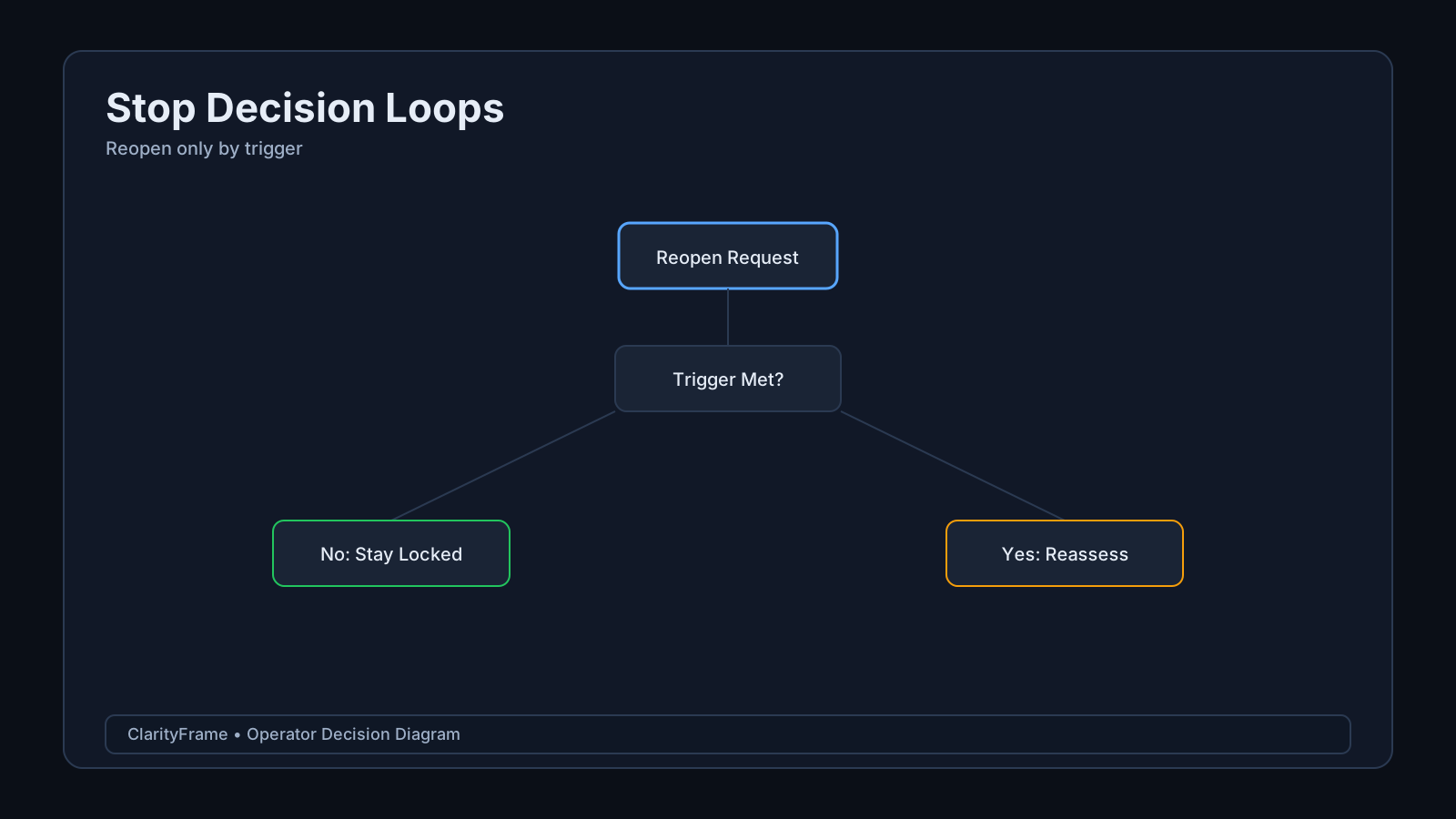
Decision loops stop when teams install a reopen rule: decisions remain closed unless predefined trigger conditions are met. Add explicit owner, rationale, and review criteria at closeout. This prevents informal relitigation, protects team focus, and preserves strategic momentum under pressure.
Summary Framework
- Close each decision with a written decision contract.
- Define exact reopen triggers at decision time.
- Block informal relitigation between review windows.
- Assign one owner for decision integrity.
- Audit reopened decisions monthly.
Definitions
Decision loop: Repeated reopening of an already committed decision without new qualifying evidence.
Decision contract: A short written record of the call, rationale, owner, and reopen criteria.
Reopen trigger: A specific condition that justifies re-evaluating a closed decision.
Problem Scenario
An exec team chooses a GTM priority. Over the next three weeks, one leader keeps raising edge cases in side conversations.
No trigger threshold was defined. Confidence drops. Teams hedge with parallel work.
The original decision exists on paper, but not in behavior.
The Close-Lock-Reopen Model
1) Close
Write one decision contract immediately:
- what was decided
- why it was decided
- who owns execution
2) Lock
State explicitly: no reopening unless trigger conditions are met.
3) Reopen (only by rule)
If trigger appears, reopen in a designated forum with the same decision owner accountable for resolution.
Before vs After
Before
Leaders re-argue decisions in informal channels.
Result: execution drift and duplicated work.
After
Team applies Close-Lock-Reopen with explicit triggers.
Result: higher decision integrity and cleaner downstream execution.
Diagnostic Checklist
- Do we have a written decision contract for this call?
- Who owns decision integrity after the meeting?
- What exact trigger permits reopening?
- Are side-channel debates overriding formal process?
- How many decisions were reopened without trigger this month?
- What is the execution cost of each loop?
Common Mistakes
- Ending meetings without written closeout.
- Using vague reopen language like “if needed.”
- Allowing informal channels to reset strategy.
- Confusing discomfort with valid trigger evidence.
When to Seek External Decision Help
If loops are persistent and trust is slipping, external facilitation can reset decision hygiene quickly and restore execution discipline.
FAQ
Are all reopened decisions bad?
No. Reopening is healthy when trigger conditions are clearly met.
What should a trigger include?
A measurable threshold, time window, and clear owner for reassessment.
How long should decision contracts be?
Short. One paragraph is usually enough if it is explicit.
Who should own decision integrity?
A single accountable leader, typically the decision owner or operator-in-chief.
Can this work in fast-moving startups?
Yes. It reduces drag by preventing repetitive debate.
How do we enforce lock rules?
Reference contracts in leadership meetings and reject reopen attempts without trigger evidence.
Bottom Line
Most decision loops are not strategy failures. They are governance failures.
Close the call, lock the boundary, reopen only by rule.
Substack
Get The Briefs By Email
Operator notes and decision frameworks sent through Substack.
Related Briefs
-
Big Decision Framework: Why Smart Teams Stall and How to MoveA practical 4-step decision framework to reduce team friction, lock ownership, and execute high-stakes calls with speed and confidence.
-
Decision Cadence Framework: How Teams Make Better Calls WeeklyA practical weekly decision cadence framework to reduce strategic drama, lock ownership, and improve execution quality under pressure.
-
What to Do When Your Team Won't CommitHow founders can move teams from endless discussion to clear commitment and accountable execution.
-
Decision Ownership Framework for LeadersA practical framework for assigning clear decision ownership so execution moves without confusion or escalation drag.
-
AI Adoption Framework: Why AI Exposes Workflow ProblemsA practical AI adoption framework for redesigning broken workflows before automating them with tools, copilots, and platforms.