Journal
Making Decisions With Incomplete Data: A Founder Confidence Model
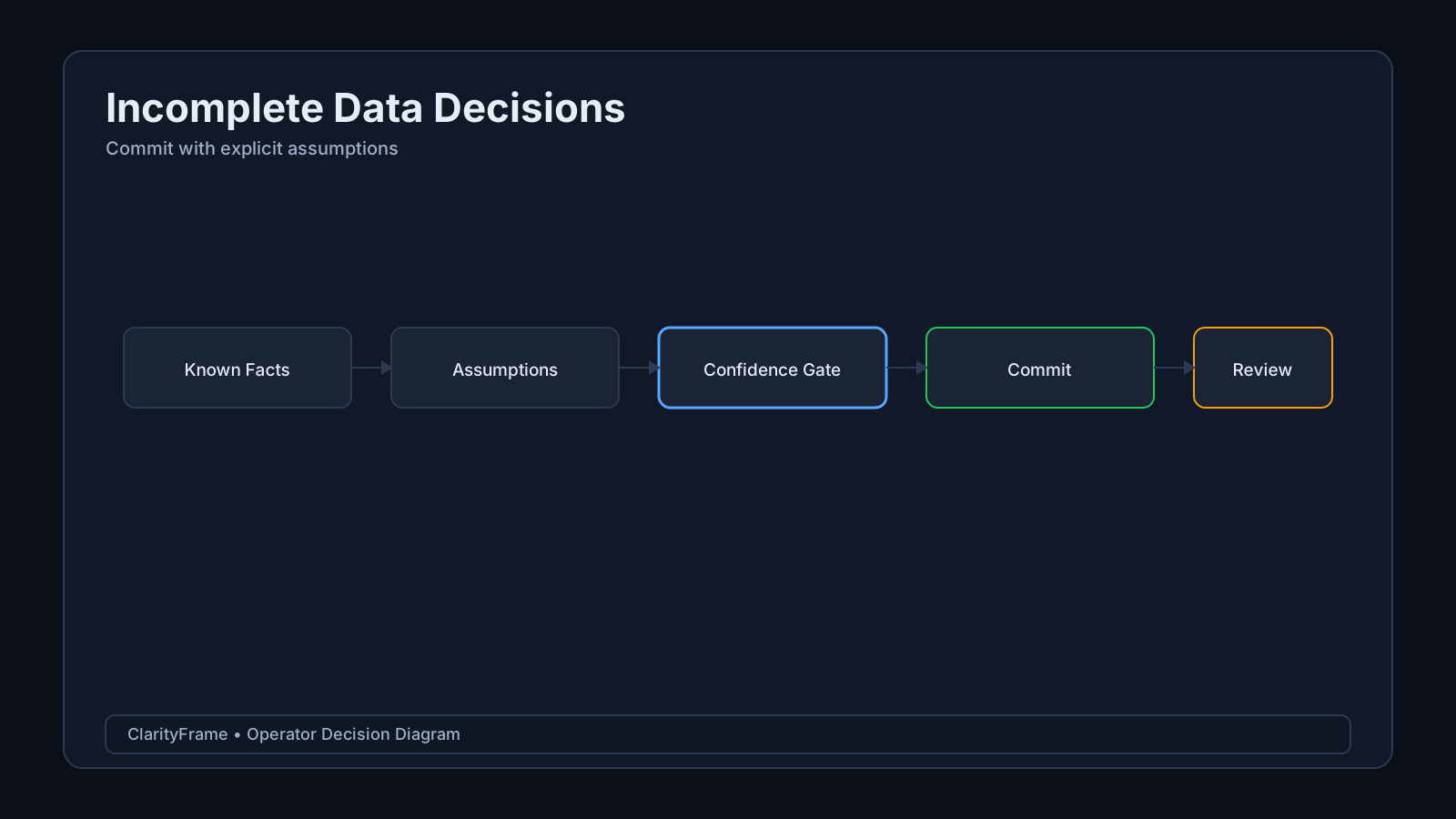
Founders rarely get perfect data windows. Most high-impact calls happen with partial, noisy, or lagging information.
The real skill is not waiting for certainty. It is making a high-quality commitment under uncertainty, with explicit assumptions and fast correction logic.
Executive Answer
When data is incomplete, founders should decide using confidence thresholds, downside mapping, and pre-defined correction triggers. The target is not perfect prediction. The target is a decision that is directionally sound, executable now, and easy to adjust when new evidence appears.
Summary Framework
- Separate known facts from active assumptions.
- Define acceptable downside before choosing a path.
- Set a confidence threshold for commitment.
- Choose the option with best expected value, not best narrative.
- Attach correction triggers before execution starts.
Definitions
Incomplete data decision: A strategic decision made before full evidence is available, using explicit assumptions and risk limits.
Confidence threshold: The minimum evidence level required to commit to action.
Downside map: A short view of what can go wrong, how bad it gets, and how quickly it can be detected.
Correction trigger: A pre-defined signal that forces adjustment or reversal.
Why This Gets Founders Stuck
Incomplete data often creates two failure modes:
- analysis drag: waiting for impossible certainty
- narrative bias: choosing the most persuasive story instead of best expected outcome
Both look rational in meetings. Both are expensive in execution.
The 3-Lens Confidence Model
Use three lenses before committing.
1) Evidence lens
What is true now versus assumed?
Write two lists:
- known facts
- uncertain assumptions
2) Risk lens
What downside is acceptable for this decision?
Rate downside on three dimensions:
- financial impact
- strategic reversibility
- operational disruption
3) Velocity lens
How quickly can we detect if this is wrong?
If feedback loops are fast, you can commit with lower certainty. If feedback loops are slow, increase your confidence threshold.
Before vs After
Before
A founder delays a channel expansion decision for five weeks waiting for cleaner attribution.
Result: pipeline stalls and competitor share grows.
After
The founder sets a 70% confidence threshold, downside guardrails, and a 21-day correction trigger.
Result: faster execution, earlier market signal, and controlled risk exposure.
Diagnostic Checklist
- Which parts of this decision are facts versus assumptions?
- What confidence level is enough for commitment?
- What is the worst plausible downside?
- How reversible is this decision in practice?
- Which metric triggers correction?
- How long until we see credible signal?
- Who owns the call and the correction path?
Common Mistakes
- Treating missing data as a reason to avoid commitment.
- Ignoring reversibility when setting confidence thresholds.
- Confusing more data with better decision quality.
- Failing to pre-define correction triggers.
- Letting loud opinions substitute for explicit assumptions.
When External Decision Help Is Useful
External decision support is useful when the team is split on assumptions, stakes are high, and delay is becoming costlier than controlled risk.
A short outside session can tighten assumptions, set guardrails, and close the call quickly.
FAQ
How much confidence is enough before deciding?
Enough to make downside acceptable and correction feasible. Many reversible decisions can be made at 60-75% confidence.
Is waiting for more data always safer?
No. Waiting can increase strategic and execution risk, especially when market windows are time-sensitive.
What if data sources conflict?
Prioritize the sources most tied to direct value creation and decision relevance.
How do I avoid reckless speed?
Use downside limits and correction triggers before you commit.
Can this work for irreversible decisions?
Yes, but confidence thresholds should be higher and downside mapping more rigorous.
What is the fastest way to improve decision quality under uncertainty?
Make assumptions explicit, lock guardrails, and shorten feedback loops.
Bottom Line
You do not need perfect data to make strong strategic calls.
You need explicit assumptions, defined risk boundaries, and the discipline to adjust fast when signal changes.
If this is a live high-pressure decision, Clarity Ignite is built for fast, high-quality commitment under uncertainty.
Substack
Get The Briefs By Email
Operator notes and decision frameworks sent through Substack.
Related Briefs
-
AI Adoption Framework: Why AI Exposes Workflow ProblemsA practical AI adoption framework for redesigning broken workflows before automating them with tools, copilots, and platforms.
-
When DIY Frameworks Fail: How to Know You Need a Thinking PartnerRecognize when the problem is framing, not information, and when a structured outside session will close the decision faster.
-
Crisis Decision Framework: How to Triage Company-Threatening EventsHandle company-threatening events by stabilizing first, assigning single owners, and sequencing decisions by urgency.
-
Partnership Decision Framework: When to Co-Sell, Integrate, or Stay SoloEvaluate partnerships by objective, incentive alignment, activation thresholds, and exit criteria before signing anything.
-
Clarity Sprint vs Ignite Framework: How to Choose the Right SessionUse a 4-step framework to choose between Clarity Sprint and Clarity Ignite based on complexity, downside, and reversibility.